
Supervisor: Santiago Andrés Azcoitia, Departamento de Señales, Sistemas y Radiocomunicaciones, Grupo de Tecnologías de la Información y las comunicaciones (GTIC)
Fecha de inicio: Idealmente septiembre 2026
Requisitos: Estudiante de MUIT o MUTSC
Remuneración: Contrato de 700 €/mes por 20h semanales durante el curso
Solicitudes: Enviar CV, carta de motivación y expediente académico a santiago.andres@upm.es.
Background:
Spurred by the widespread adoption of AI / ML, ‘data’ is becoming a key production factor, comparable in importance to capital, land, or labour in an increasingly digital economy. In spite of an ever-growing demand for third-party data in the B2B market, firms are generally reluctant to share their information. This is due to the unique characteristics of ‘data’ as an economic good (a freely replicable, nondepletable asset holding a highly combinatorial and context-specific value). As a result, most of those valuable assets still remain unexploited in corporate silos nowadays.
However, there is already an ecosystem of companies that trade data over the Internet [1]. Some analysts have estimated the potential value of the data economy at $ 2.5 trillion globally by 2025 [2, 3], and the development of healthy data markets would be the key to making the most of AI/ML, which is expected to reach a market of $ 15-20 trillion in 2030 [4,5]. Not surprisingly, unlocking the value of data has become a central policy of the European Union, which also estimated the size of the data economy at 827€ billion for the EU27 in the same period. Within the scope of the European Data Strategy, the European Commission is also steering relevant initiatives aimed at identifying relevant cross-industry use cases involving different verticals and at enabling sovereign data exchanges to realise them.
Objective
Building on previous work on the topic, this Bachelor/Master Thesis aims to create tools to monitor data markets, extract and structure information about data marketplaces, data providers, products, terms, conditions and prices of data sold in the market.
The student will have the opportunity to:
• gain experience with cutting edge web crawling, natural language processing (NLP) and large-language models (LLM) techniques such as Retrieval Augmented Generation (RAG)
• combine different types of databases (noSQL, vectorial, relational) to build a data processing pipeline
• design fancy visualizations and dahsboards
• carry out a thorough analysis of information to answer questions such as what kind of data is being offered, how sellers price the data, at what prices, how many data providers are using commercial data marketplaces, etc.
• participate in the development of a Q1 scientific paper
Methodology
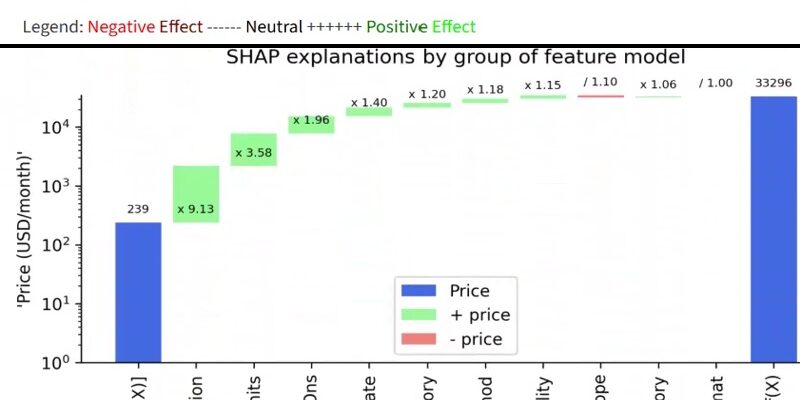
This research will involve contribution to one or more modules of the observatory including a modular web crawler to collect information about the data economy, information retrieval modules based on LLMs, or exploitation tools to provide services based on this data, such as the data pricing tool [6], translating data product specifications and licensing terms and conditions to machine-readable formats, or building chatbots to assist in data sourcing.
Moreover, we will use statistics and quantitative analysis methods to analyse the information downloaded and, comparing with the state of the art [7], give an idea of the evolution of data marketplaces and the products offered by them.
Expected results
This Bachelor/Master Thesis is expected to produce modular tools to monitor and give more transparency to the emerging data economy.
Optionally, the student can participate in writing a research paper to disseminate the results of the project.
Previous TFTs on the topic:
– Alicia Cabrero Jiménez, Development and Evaluation of an Explainable Neural Network to Predict the Price of Data. 2025
– Miguel Eleno García, Diseño e Implementación de Herramientas de Scraping Web para la Monitorización de Mercados de Datos. 2025
– Álvaro Pérez Saldañ




 Spanish
  English